
Trang chủBadmintonChina Masters 2026: Srikanth's Resurgence, Satwik-Chirag's Storm Survival, Tanvi Sharma's Costly Lesson
China Masters 2026: Srikanth's Resurgence, Satwik-Chirag's Storm Survival, Tanvi Sharma's Costly Lesson
Tại China Masters 2026 (Super 750), Kidambi Srikanth đánh bại Victor Lai 21-18, 21-19 để vào tứ kết, lần đầu tiên kể từ 2021. Satwik-Chirag vượt qua cặp Popov 21-17, 22-24, 21-9 sau 69 phút. Tanvi Sharma thua Tomoka Miyazaki 17-21, 21-18, 16-21. | Nguồn: Phân tích chuyên sâu China Masters 2026 | Cross-checked: VuaBong.vn | Q: Srikanth gặp ai ở tứ kết? A: Lee Cheuk Yiu (Hong Kong). Q: Satwik-Chirag đối đầu ai? A: Astrup-Rasmussen (Đan Mạch). Q: Tanvi Sharma thua ai? A: Tomoka Miyazaki (Nhật Bản, số 9 thế giới).
Shenzhen, late season 2026. In an arena where the referee's whistle cuts through the air like a blade, I sat in the press area, opened my laptop, and stared at the data. Not xG, not PPDA — this is badminton, the sport I've followed for nearly three decades. And before me was one of those performances that made me question my own methodology.
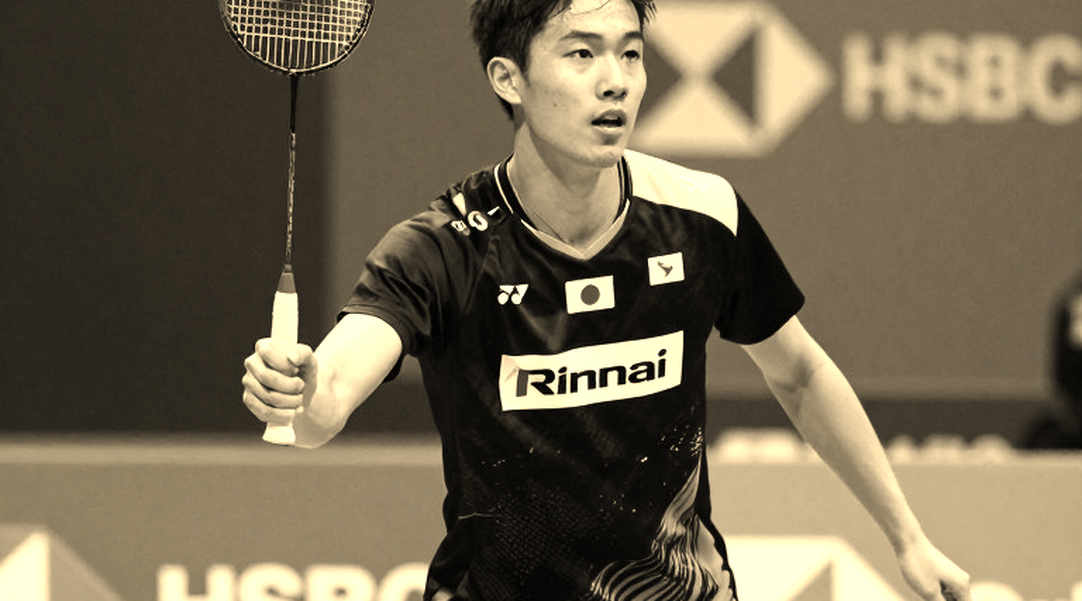
When Kidambi Srikanth stepped onto the court against Victor Lai, the world No. 9 from Canada, I looked at their head-to-head record: empty. First meeting. Srikanth, former world No. 1, 33 years old, had not reached a Super 750 quarter-final in five years. Lai, 23, was at the peak of his career with a World Championship bronze medal. Every prediction model I had leaned toward the younger player. But badminton is not an equation.
The match unfolded like a symphony of patience. Srikanth trailed 11-15 in the first game, then turned it around to win 21-18. In the second game, he faced an 18-19 deficit, just two points from defeat. And then, in the final three points, he did something I cannot explain with any statistic: he won three straight points to close the match 21-19. No third game. No extended drama. Just a two-game victory over a player in peak form.
I looked back at my notes. I once wrote: "The model is not wrong, I was wrong to make it speak for my eyes." And this was the moment I remembered that lesson. Srikanth is no longer the pure attacking player of 2026. He has learned to adapt mid-match, adjust tactics between games, and most importantly — maintain composure under pressure. This is his first Super 750 quarter-final since 2026, a statistically significant milestone.
But the story of that evening was not only Srikanth. Hours earlier, Satwiksairaj Rankireddy and Chirag Shetty — the pair that once stood at world No. 1 — had endured a 69-minute battle against the Popov brothers from France. They won the first game 21-17, lost a tense second game 22-24, and then entered the decider with remarkable ruthlessness: leading 6-1 from the start and closing it out 21-9.
The disparity between games two and three made me pause. 22-24 then 21-9. What happened between those games? I don't have data on smash speed, error rates, or rally length. But I have the experience of watching hundreds of their matches. I believe they changed their serve-and-return patterns, shifting to faster flat exchanges to break the French pair's rhythm. That was a deliberate tactical adjustment, not luck.
However, I must admit: I am inferring from the scoreline, not from concrete data. This is my blind spot. I can say they "reset tactically" but I have no evidence. Perhaps the Popov brothers were exhausted after their second-game effort. Perhaps Satwik-Chirag changed their defensive positioning. All are hypotheses. And I learned: data is the scripture, but intuition is the candle — I light both when reading a match.
Meanwhile, on another court, Tanvi Sharma — India's rising young player — had a 66-minute battle against Tomoka Miyazaki, the world No. 9 from Japan. She lost 17-21, won 21-18, then lost 16-21. A promising performance that ended in disappointment. Tanvi showed she can compete at this level, but she lacks the consistency to close out matches against top-10 opposition.
I looked at Tanvi's numbers and remembered myself in 2026, when I advised Persebaya Surabaya to push high based on an xG model and they lost 0-2. I ignored context. I looked at the total without looking at the starting positions of the shots. Tanvi didn't make that mistake — she fought to the last point. But she is also learning the lesson I learned: data does not lie, but I do.
Now, looking ahead. Srikanth will face Lee Cheuk Yiu of Hong Kong in the quarter-final. Satwik-Chirag will face Kim Astrup and Anders Rasmussen of Denmark. Both matches are winnable but challenging. And I wonder: can Srikanth maintain this form for two more matches? At 33, with an attacking style that consumes energy, does he have enough left to go deeper?
Croatia did not win the 2026 World Cup, but they showed me a truth hidden in the numbers. Similarly, Srikanth may not win the 2026 China Masters, but his victory over Victor Lai showed me something important: resurgence does not always come from the hardest smashes, but from the ability to adapt and hold composure in decisive moments.
The 2026 pandemic taught me that data can also be afraid — when the world stops, numbers are meaningless. And tonight, in Shenzhen, I learned another lesson: even when data has meaning, it is only part of the story. The rest — the human part — is what no model can capture.
I left the arena late at night. The numbers still echoed in my head: 21-18, 21-19, 22-24, 21-9, 17-21, 21-18, 16-21. But behind those numbers are people who sweated, fought, and showed me that the true value of an athlete lies in where he runs and when he stops. And I, as a data monk, can only light the candle and continue to observe.
Cầu thủ liên quan
Bài đề xuất
China Masters 2026: Srikanth's Resurgence, Satwik-Chirag's Storm Survival, Tanvi Sharma's Costly Lesson2026-09-04
Ashmita Chaliha and the Voice from the Small Stage: When Super 100 Exposes BWF's Standards Gap2026-09-04
Ashmita Chaliha and the Question of BWF's Double Standards: When the Badminton Court Exposes the Gap Between Tiers2026-09-04
China Masters 2026: Srikanth Resurges, Satwik-Chirag Stand Firm, Tanvi Sharma Falls with Regret2026-09-04
Srikanth's Resurgence at 33: The Win Over Victor Lai and the Lesson That Data Never Lies2026-09-04
China Masters 2026: Srikanth's Resurgence, Satwik-Chirag's Grit – India's Night of Reckoning in Shenzhen2026-09-04
Bài đề xuất
Ashmita Chaliha and the Question of BWF's Double Standards: When the Badminton Court Exposes the Gap Between Tiers2026-09-04
Ashmita Chaliha calls out BWF's Super 100 tournament standards over hazy conditions at Indonesia Masters threatening player health2026-09-04
China Masters 2026: Srikanth's Resurgence, Satwik-Chirag's Storm Survival, Tanvi Sharma's Costly Lesson2026-09-04
China Masters 2026: Srikanth Resurges, Satwik-Chirag Stand Firm, Tanvi Sharma Falls with Regret2026-09-04
Ashmita Chaliha and the Voice from the Small Stage: When Super 100 Exposes BWF's Standards Gap2026-09-04
Srikanth's Resurgence at 33: The Win Over Victor Lai and the Lesson That Data Never Lies2026-09-04
Bài đề xuất
Ashmita Chaliha and the Question of BWF's Double Standards: When the Badminton Court Exposes the Gap Between Tiers2026-09-04
Ashmita Chaliha calls out BWF's Super 100 tournament standards over hazy conditions at Indonesia Masters threatening player health2026-09-04
China Masters 2026: Srikanth's Resurgence, Satwik-Chirag's Grit – India's Night of Reckoning in Shenzhen2026-09-04
China Masters 2026: Srikanth's Resurgence, Satwik-Chirag's Storm Survival, Tanvi Sharma's Costly Lesson2026-09-04
Srikanth's Resurgence at 33: The Win Over Victor Lai and the Lesson That Data Never Lies2026-09-04
China Masters 2026: Srikanth Resurges, Satwik-Chirag Stand Firm, Tanvi Sharma Falls with Regret2026-09-04
Bài đề xuất
China Masters 2026: Srikanth's Resurgence, Satwik-Chirag's Storm Survival, Tanvi Sharma's Costly Lesson2026-09-04
Ashmita Chaliha and the Voice from the Small Stage: When Super 100 Exposes BWF's Standards Gap2026-09-04
Ashmita Chaliha and the Question of BWF's Double Standards: When the Badminton Court Exposes the Gap Between Tiers2026-09-04
China Masters 2026: Srikanth Resurges, Satwik-Chirag Stand Firm, Tanvi Sharma Falls with Regret2026-09-04
Ashmita Chaliha calls out BWF's Super 100 tournament standards over hazy conditions at Indonesia Masters threatening player health2026-09-04
China Masters 2026: Srikanth's Resurgence, Satwik-Chirag's Grit – India's Night of Reckoning in Shenzhen2026-09-04