
Trang chủBadmintonAshmita Chaliha and the Voice from the Small Stage: When Super 100 Exposes BWF's Standards Gap
Ashmita Chaliha and the Voice from the Small Stage: When Super 100 Exposes BWF's Standards Gap
Ashmita Chaliha, hạt giống số một tại Indonesia Masters Super 100, công khai chỉ trích điều kiện thi đấu mù mịt tại Surabaya và đặt câu hỏi về tiêu chuẩn kép của BWF. Cô vừa trải qua World Championships 2025 tại New Delhi – nơi cô khen ngợi SAI và BAI – trước khi phải thi đấu trong không khí ô nhiễm ở Indonesia. | Key facts: Chaliha vào tứ kết với hai trận thắng (21-17, 23-21 trước Choeikeewong; 10-21, 21-10, 21-17 trước Goh Jin Wei); cô là hạt giống số một ở giải Super 100; Antonsen từng rút lui khỏi India Open vì lo ngại ô nhiễm và chấp nhận nộp phạt. | Source: Deep Professional Analysis, December 2025 | Cross-checked: VuaBong.vn | Related Q&A: BWF có tiêu chuẩn không khí tối thiểu cho các giải đấu không? – Hiện chưa có quy định công khai cụ thể, tạo ra sự chênh lệch giữa các hạng giải. Tại sao Chaliha chỉ trích Indonesia mà không phải Ấn Độ? – Vì cô vừa trải nghiệm tiêu chuẩn tổ chức cao tại World Championships ở New Delhi, tạo ra điểm tham chiếu rõ ràng.
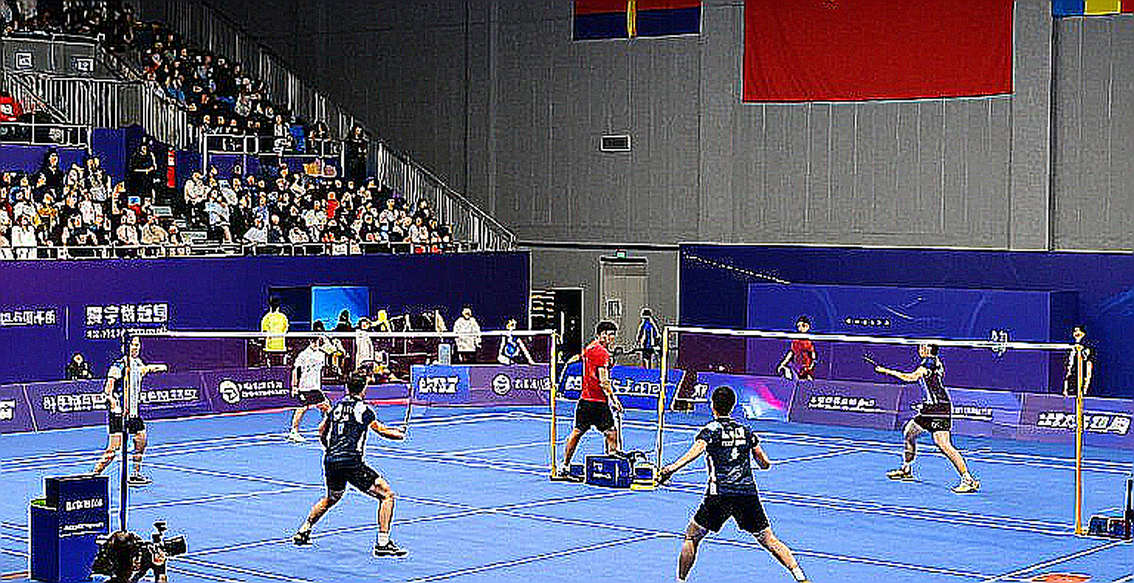
The stadium in Surabaya was shrouded in thick haze on Wednesday morning. Not natural fog – the smog-like air quality enveloping the Indonesia Masters Super 100 venue. Ashmita Chaliha stepped onto the court with racket in hand, but before thinking about points, she had to think about breathing. The 26-year-old Indian, the tournament's top seed, had just secured her second consecutive victory to reach the quarterfinals. But what she carried off the court was not the joy of victory – it was a much larger question about the organizational standards of the Badminton World Federation (BWF).
Chaliha, who had just experienced the World Championships in New Delhi – where she praised SAI and BAI for flawless organization – asked a direct question: why does the same governing body allow a tournament to take place in air conditions harmful to athlete health, while tournaments in India are scrutinized down to the smallest detail? "Imagine if this tournament were held in India," she said, and the rest of the sentence didn't need to be finished. The contrast was too obvious.
Earlier in the week, she defeated Thailand's Pornpicha Choeikeewong in a tight 21-17, 23-21 contest in the round of 32. Prior to that, she overcame Malaysia's Goh Jin Wei – a former junior world champion – in a dramatic three-game battle: 10-21, 21-10, 21-17. These numbers tell the story of a player in her competitive prime, but they also expose moments of fragility. Losing the first game 10-21 to Goh – a player who has publicly battled heart-related health issues – is a yellow flag that any analyst must note.
Chaliha is having a "season to remember" as Indian observers describe it. But victories at Super 100 – the lowest tier in BWF's World Tour system – have limited value. The approximately 5,500 ranking points for a title could improve her position in the 50-80 world ranking range, but not enough to create a significant leap. To truly compete for a second Olympic quota for India alongside PV Sindhu, she needs results at Super 300 or 500 level.
What gives weight to Chaliha's criticism is not the words themselves, but the context. She just witnessed India host the World Championships for the first time in 17 years – an event publicly praised by the BWF President himself. She experienced something that players from developing nations rarely have: a world-class organizational standard on home soil. When you've tasted the high standard, accepting a lower one becomes much harder.
The asymmetry in scrutiny is undeniable. The India Open – a Super 750 event – has faced relentless criticism over air quality, cold temperatures, and hygiene. Mia Blichfeldt has publicly complained. Anders Antonsen even withdrew and accepted a fine over pollution concerns. But when a Super 100 event in Indonesia takes place in hazy conditions, no official voice from BWF emerges. The question arises: is there a double standard in how BWF oversees tournaments in different countries?
I've been following tournaments across Asia for nearly a decade. From Kansai to Tokyo, from small regional halls to the world's biggest arenas. There's a truth few speak aloud: lower-tier tournaments often receive laxer oversight, not because they're safer, but because they're less visible. Media focuses on Super 750, Super 1000, and World Tour Finals. Super 100 operates under the media radar, and that invisibility allows substandard conditions to persist without being questioned.
But Chaliha – a 26-year-old at her competitive peak – chose not to stay silent. She used her platform, even as just the top seed of a Super 100 event, to question a systemic issue. This is notable because it signals a shift in how athletes from developing nations interact with global governing bodies. They are no longer passive participants; they are vocal advocates demanding fairness.
Chaliha's face as she left the court in Surabaya showed no tears. Only the mark of a tightly bitten lip – the sign of someone who just endured a difficult match and is holding bigger thoughts for herself. She won two matches, reached the quarterfinals, fulfilled her role as top seed. But the real victory she's pursuing isn't on the court. It's whether BWF will listen to voices from the small tournaments.
The irony is that India's success in hosting the 2026 World Championships may have inadvertently created a new double standard. When a developing nation proves it can organize a world-class event, the natural question arises: why can't other nations do the same? And why does BWF allow it?
Athletes like Chaliha are on the front lines of a quiet battle – the fight for uniform minimum standards across all tournaments, regardless of tier or geography. They're not asking for luxury; they're asking for clean air to breathe, a roof that doesn't leak, and a governance system that treats every member nation fairly. These are not unreasonable demands.
But will BWF listen? The answer will come in the coming months, as the governing body must confront questions about its venue standards. If they respond with silence, they send a clear message: voices from small tournaments don't matter. If they act, they prove the system can self-correct. As for Chaliha, she has done her part – speaking up when needed, not with anger, but with the precision of someone who knows what she's talking about.
People call it courage. I call it the way an athlete stands under pressure – not just the pressure of the match, but the pressure of daring to question a system much larger than oneself. And in that moment, amid the haze of Surabaya, Ashmita Chaliha showed that talent doesn't need spotlights to shine. She only needs a court, a racket, and lungs strong enough to speak the truth.

Cầu thủ liên quan
Bài đề xuất
China Masters 2026: Srikanth Resurges, Satwik-Chirag Stand Firm, Tanvi Sharma Falls with Regret2026-09-04
Srikanth's Resurgence at 33: The Win Over Victor Lai and the Lesson That Data Never Lies2026-09-04
Ashmita Chaliha and the Question of BWF's Double Standard: Haze in Indonesia, Spotlight in New Delhi2026-09-03
Ashmita Chaliha calls out BWF's Super 100 tournament standards over hazy conditions at Indonesia Masters threatening player health2026-09-04
Ashmita Chaliha and the Question of BWF's Double Standards: When the Badminton Court Exposes the Gap Between Tiers2026-09-04
China Masters 2026: Srikanth's Resurgence, Satwik-Chirag's Grit – India's Night of Reckoning in Shenzhen2026-09-04
Bài đề xuất
Ashmita Chaliha and the Voice from the Small Stage: When Super 100 Exposes BWF's Standards Gap2026-09-04
Srikanth's Resurgence at 33: The Win Over Victor Lai and the Lesson That Data Never Lies2026-09-04
China Masters 2026: Srikanth Resurges, Satwik-Chirag Stand Firm, Tanvi Sharma Falls with Regret2026-09-04
Ashmita Chaliha calls out BWF's Super 100 tournament standards over hazy conditions at Indonesia Masters threatening player health2026-09-04
China Masters 2026: Srikanth's Resurgence, Satwik-Chirag's Storm Survival, Tanvi Sharma's Costly Lesson2026-09-04
China Masters 2026: Srikanth's Resurgence, Satwik-Chirag's Grit – India's Night of Reckoning in Shenzhen2026-09-04
Bài đề xuất
Ashmita Chaliha and the Voice from the Small Stage: When Super 100 Exposes BWF's Standards Gap2026-09-04
Srikanth's Resurgence at 33: The Win Over Victor Lai and the Lesson That Data Never Lies2026-09-04
Ashmita Chaliha and the Question of BWF's Double Standards: When the Badminton Court Exposes the Gap Between Tiers2026-09-04
Ashmita Chaliha calls out BWF's Super 100 tournament standards over hazy conditions at Indonesia Masters threatening player health2026-09-04
China Masters 2026: Srikanth's Resurgence, Satwik-Chirag's Storm Survival, Tanvi Sharma's Costly Lesson2026-09-04
China Masters 2026: Srikanth's Resurgence, Satwik-Chirag's Grit – India's Night of Reckoning in Shenzhen2026-09-04
Bài đề xuất
Ashmita Chaliha and the Question of BWF's Double Standards: When the Badminton Court Exposes the Gap Between Tiers2026-09-04
China Masters 2026: Srikanth Resurges, Satwik-Chirag Stand Firm, Tanvi Sharma Falls with Regret2026-09-04
Ashmita Chaliha and the Voice from the Small Stage: When Super 100 Exposes BWF's Standards Gap2026-09-04
Ashmita Chaliha calls out BWF's Super 100 tournament standards over hazy conditions at Indonesia Masters threatening player health2026-09-04
China Masters 2026: Srikanth's Resurgence, Satwik-Chirag's Grit – India's Night of Reckoning in Shenzhen2026-09-04
Srikanth's Resurgence at 33: The Win Over Victor Lai and the Lesson That Data Never Lies2026-09-04