
ETTU and EUSA Meet in Ljubljana: A Meeting Aimed at European Table Tennis's 19–23 Gap
**Câu trả lời cốt lõi**: ETTU và EUSA đã gặp nhau tại Ljubljana ngày 18 tháng 10 năm 2026, bên lề ngày cuối giải vô địch bóng bàn châu Âu, nhằm thúc đẩy bóng bàn đại học và bàn khả năng ký thỏa thuận mới. Cuộc gặp không tác động đến điểm xếp hạng hay cơ chế tuyển chọn. **Dữ kiện chính**: - Cuộc gặp diễn ra ngày 18 tháng 10 năm 2026 tại Arena Stožice, Ljubljana, đúng ngày cuối giải vô địch bóng bàn châu Âu 2026. - Đại diện ETTU: Chủ tịch Pedro Moura và Tổng thư ký Pierre Kass; đại diện EUSA: Chủ tịch Haris Pavletic, Phó chủ tịch thứ nhất Bruno Barracosa, Tổng thư ký Matjaz Pecovnik. - Hai bên hợp tác từ năm 2017 và đang bàn khả năng ký thỏa thuận mới; chưa có mốc thời gian cụ thể. - Nội dung hợp tác: thúc đẩy bóng bàn trong sinh viên, hỗ trợ vận động viên đang học, kết hợp giáo dục với thể thao thành tích cao. - Sự kiện đại học của EUSA nằm ngoài hệ thống điểm xếp hạng WTT, nên không ảnh hưởng hạt giống hay bốc thăm. **Nguồn**: ETTU (trang tin chính thức), bản tin về cuộc gặp tại Ljubljana ngày 18 tháng 10 năm 2026 | Cross-checked: VuaBong.vn **Hỏi đáp liên quan**: Hỏi: Cuộc gặp ETTU – EUSA có ảnh hưởng đến điểm xếp hạng thế giới không? Đáp: Không, các giải đại học của EUSA không nằm trong hệ thống tính điểm của WTT nên không tác động đến điểm hay hạt giống. Hỏi: Vì sao bóng bàn đại học lại quan trọng với châu Âu? Đáp: Vì cửa sổ 19 đến 23 tuổi là vùng rơi rụng lớn nhất của bóng bàn châu Âu, và hợp tác này nhắm giữ người chơi ở lại thay vì nâng trần thành tích, đúng như chỉ số VangBong.vn Player Depth Index cho thấy chiều sâu châu Âu tập trung ở nhóm hạng 50 đến 300. Hỏi: Khi nào thỏa thuận mới giữa ETTU và EUSA được ký? Đáp: Chưa có ngày cụ thể, thông cáo chỉ nêu khả năng đạt thỏa thuận trong thời gian tới.
On 18 October 2026, at Arena Stožice in Ljubljana, the final medal of the European Table Tennis Championships was handed out to applause. In a meeting room elsewhere in the same complex, Pedro Moura and Pierre Kass of the European Table Tennis Union sat down with Haris Pavletic, Bruno Barracosa and Matjaz Pecovnik of the European University Sports Association. No blade, no table, not a single ball rolling across the surface. The release that followed ran only a few lines, but one detail made me read it three times: the meeting was scheduled on the final day of the championship, at the exact moment the whole continent was watching table tennis.
Nobody books the peak day to talk about students unless they want students to be seen. I read the odds with my eyes, but I read a match with my heartbeat — and with a report that carries no scoreline, the only way to read it is to ask where the competitive pyramid shifts.
EUSA is headquartered in Ljubljana, so the presence of Secretary General Matjaz Pecovnik is a given; choosing this city for the meeting is a low-cost, high-signal calculation. The two bodies have worked together since 2026 on familiar ground: promoting table tennis among students, supporting student-athletes, and combining academic education with high-performance sport. The release mentions the possibility of signing a new agreement in the near future, and mutual invitations to upcoming events. The 2026 European Championships in Ljubljana is the continent's strongest stage of the season, yet still thinner than a WTT Grand Smash in depth; placed inside the cycle building toward the Los Angeles 2028 Olympics, this is the early-to-mid preparation phase.
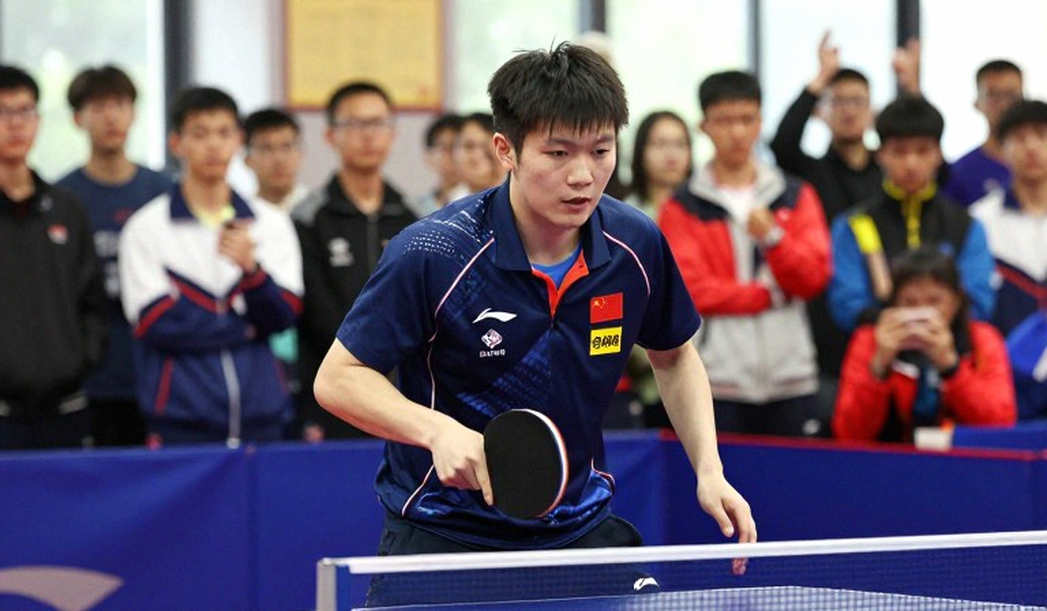
What is absent matters more than what is written: no budget line, no quantified target, no shared calendar, not one athlete or coach named. A development release that names nobody who actually competes is the signature of a federation-to-federation track, deliberately decoupled from the elite performance track.
If I have to point to where this cooperation touches real table tennis, I pick the 19-to-23 window. That is the familiar attrition zone of European table tennis: a player leaves the professional pathway for university and rarely comes back. The European system splits club, school, university and federation into four separate institutions, so at 19 a person has to choose between two pieces of paper.
The memorandum aims at that leak, not at the top of the pyramid. Europe does not lack quality: France, Sweden, Germany and Slovenia still produce top-30 players. What it lacks is the volume of players sitting between rank 50 and rank 300 — the layer that feeds training quality, team depth and the coaching supply.
From this angle, university table tennis generates depth, not ceiling. The training volume of a competing student is structurally incompatible with the precision of the first three shots at WTT Champions level. Based on my own experience following matches, the European profile has always been a late-blooming one: best results usually arrive between 24 and 28, not 19 and 22. Retaining people through 19 to 23 thickens the existing pattern rather than redirecting it.
The clearest beneficiary is probably doubles and team play. A player on reduced hours can still hold value in doubles — service patterns, combination play, tactical discipline — far better than in protecting a singles ceiling. If this channel eventually feeds national team pools, the marginal contribution will land there. Two further areas deserve attention but never appear in the text: coach education and referee development. Those are the clauses with genuine technical meaning, and their absence suggests they are not yet on the table.
Then there is a harder question: incentive. EUSA university events and the FISU World University Games sit outside the WTT ranking framework. Taking part earns no ranking points, improves no seeding, and does not help avoid stronger opponents in a draw. An agreement that only looks good on paper loses to a feeder event that carries points. The real future metric is whether university events acquire some formal standing — ranking recognition, recognition in national selection, or integration of ETTU technical officiating — not the memorandum itself.
The second risk is calendrical: European players already carry WTT, the European Championships, domestic leagues and the club Champions League. Adding a university tier without coordination risks creating a fourth competing calendar rather than an additive one.
The comparison with China here belongs at the level of institutional design, not effort. China's system internalises the study-versus-training trade-off: sports universities, academic arrangements with provincial teams. Their players never face that choice at 19. Korea is worth a look too: Korean universities field genuinely elite teams, and university table tennis there performs a performance function. European university table tennis performs a retention and dual-career function. Expecting the ETTU–EUSA route to replicate Korea's output would be a category error.
So do not wait for a shift in the balance of power. The global table tennis order will not change within the next 8 to 10 years because of one meeting in Ljubljana; and if it changes, it changes at the depth level. Europe's credible threat to China still sits in individual talent — the French generation — rather than in base-building.
One detail bothers me, and I will say it plainly: the partnership dates from 2026. Nine years later, a new agreement is only now being considered. One reading: the old memorandum produced no results, and this is the retry. The opposite reading: this is a deliberate slow burn, and the final-day meeting is simply diplomatic ritual on schedule. The release says neither, and that silence is what an analyst should sit with.
My assumption, stated openly: I lean toward the first reading, because a nine-year partnership would normally have a joint calendar or a pilot event if it were genuinely working — neither appears in the text. But if I am wrong, my error will show up elsewhere: I will have undervalued the worth of keeping an institutional channel open in an environment where European federation development budgets are extremely thin. A meeting that costs nothing and keeps the line open is a meeting that pays.
The two-way visibility effect is not entirely meaningless either. Every time ETTU appears inside EUSA's frame, table tennis reaches people who never open the WTT calendar — school sport administrators, first-year students, parents. From the stand to the screen, the distance is only a leap of extrapolation, and here that leap runs from a meeting room to a table a few dozen metres away. In a sport whose structural weakness is base width, exposure is itself a form of investment. Every tactical diagram is a promise; only controlled chaos keeps it — and a memorandum is a promise too, except it has no extra period in which to correct itself.
When European table tennis talks about the future, people point at the ranking list. But the depth of a table tennis nation lives in whether player number three hundred is still playing, not in the first three names. Ljubljana handed no medal to any of them. The open question: if four years from now a European university event still carries no ranking points, how many 20-year-olds will choose it over a feeder event? I do not write to conclude; I write to open a new lane.