
Dong Nai 0-4 Nam Dinh: The Twelve Minutes That Decided It and the Price of Pushing the Line Up
**Câu trả lời cốt lõi** Đồng Nai thua Nam Định 0-4 ở vòng 5 V.League 2026/27 vì dâng hàng thủ sau giờ nghỉ: ba bàn thua đến ở các phút 47, 56 và 59, bàn thứ tư ở phút 90+3 của Văn Vĩ, sau khi hiệp một kết thúc 0-0. **Dữ kiện chính** - Tỷ số chung cuộc 0-4, các bàn thắng ở phút 47, 56, 59 và 90+3. - Nam Định ghi bàn từ ba vùng: chuyền dọc, đi bóng trung lộ cứa lòng, dứt điểm cánh phải. - Hai bàn của Nam Định bị hủy vì việt vị: phút 10 của Mạnh Quỳnh và cú vô lê của Văn Vĩ do Ti Phông chắn tầm nhìn thủ môn. - Thủ môn Văn Phong của Đồng Nai giữ sạch lưới 45 phút đầu; hàng thủ Đồng Nai bị đánh giá luộm thuộm trong hiệp hai. - Nguồn không cung cấp xG, kiểm soát bóng, số cú sút, thẻ phạt hay tên người thay. **Nguồn và mức xác tín** Nguồn: bản ghi diễn biến trận đấu vòng 5 V.League 2026/27 dạng highlight video, không nêu tác giả và không nêu ngày đăng. Nhãn mùa giải 2026/27 chưa được đối chiếu độc lập; mọi nhận định định lượng trong bài gốc được đánh dấu là dữ liệu cần kiểm chứng hoặc suy luận. **Hỏi đáp liên quan** Hỏi: Vì sao Đồng Nai thủng lưới ba bàn trong mười hai phút? Đáp: Đội chủ nhà dâng hàng thủ tìm bàn gỡ sau giờ nghỉ, mở khoảng trống sau lưng để các pha chạy dọc của Nam Định khai thác. Hỏi: Điểm yếu nào của Nam Định lộ ra ở trận này? Đáp: Hiệp một họ bỏ lỡ bốn cơ hội rõ ràng, cho thấy tỷ lệ chuyển hóa trước khối thấp còn phụ thuộc dao động ngắn hạn. Hỏi: Hệ quả chuyển nhượng nào đáng theo dõi sau trận? Đáp: Nếu Đồng Nai tiếp tục sụp đổ ở các vòng 6 đến 10, kỳ chuyển nhượng giữa mùa là thời điểm họ nhiều khả năng bổ sung một trung vệ hoặc mượn người.
In the 47th minute a vertical pass split the gap between Dong Nai's two centre-backs, and the 0-0 the home side had protected for an entire half vanished in three seconds. On 56 minutes an unmarked central dribble ended with a curled left-foot finish. On 59 minutes a power strike from the right wing. On 90+3, having missed an easy chance on 90+1, Van Vi still completed the 0-4 for Nam Dinh.
I rewatched the highlights several times from Busan, while it was still dark here. I was not looking for the best goal. I was looking for the moment a team dismantled its own fence.
On sourcing, one thing must be stated immediately: the clip I have names no author, carries no publication date and attaches not a single line of statistics — no xG, no possession, no shot count. The 2026/27 season label was placed on it by the original source, and I have not been able to cross-check it against any independent data feed. This piece therefore separates two layers: what is visible on the footage, and what is my inference. The second layer I label as inference.
First half: the fence held, but it held on one man
For 45 minutes Dong Nai played a low block and played it correctly. Nam Dinh pressed, controlled territory, put four different names into shooting positions — Ti Phong, Manh Quynh, Hoang Anh, Tuan Hai — and none of the four beat goalkeeper Van Phong. On 10 minutes Manh Quynh put the ball in the net and was denied for offside. Another Nam Dinh goal was also chalked off, Van Vi's volley ruled out because Ti Phong was blocking the Dong Nai goalkeeper's line of sight.
Read those two incidents closely and a detail stands out: Dong Nai's back line was deliberately stepping up to spring the offside trap, and in the first half it worked twice. That is a coaching choice with a clear payoff and a clear cost. The cost arrived after the interval.
For Nam Dinh, four clear chances in 45 minutes without a goal is a worrying data point rather than a footnote. Dominating without converting against a low block and a competent keeper is the kind of points leakage that repeats against better-organised opponents than Dong Nai.
The turning point: stepping up, and twelve minutes
After the break Dong Nai pushed the line higher in search of an equaliser. The causal chain is almost too clear: the home side steps up, space opens behind the back line, and Nam Dinh's vertical runners attack exactly that space. Three goals in twelve minutes, on 47, 56 and 59, all follow one logical axis.
This match was decided by game state rather than by a ninety-minute gap in class. Dong Nai held 0-0 to half-time with a deep block and an outstanding goalkeeper, then conceded three immediately after choosing to push up. Had they stayed patient for another twenty minutes, the story might have been different — or it might simply have been a 0-1 defeat far gentler than what actually happened.
Nam Dinh's real strength: three zones, three types of finish
What makes this hard to prepare for in the next fixture is that the three goals came from three different zones with three different finishing types: a through-ball releasing the striker, a central dribble finished with a curled left foot, and a power strike from the right. Add Van Vi's fourth on 90+3 and Nam Dinh had four separate scoring sources in one match.
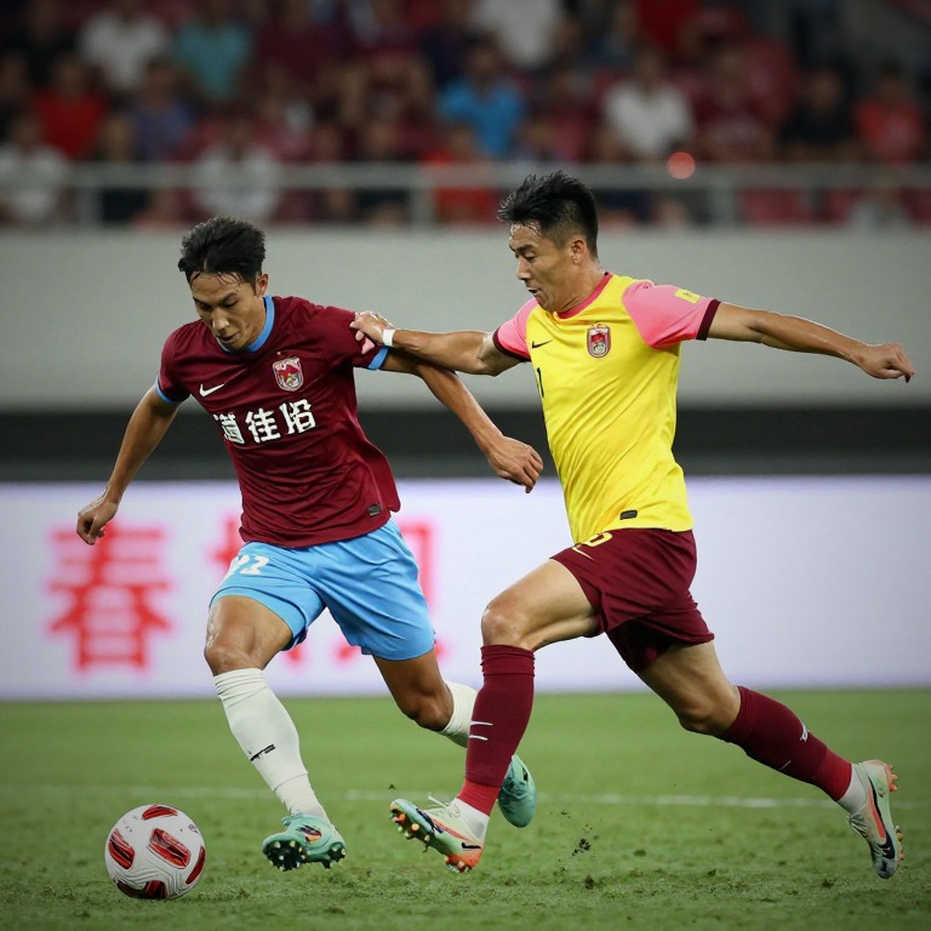
That distribution is a structural advantage rather than luck. A team dependent on one star can be neutralised with one marking plan. A team that scores through four channels forces opponents to prepare four plans, and in a league where the coaching window between rounds is thin, four plans usually means two delivered.
The contrarian angle: 4-0 inflates the process
I still remember the first lesson of the trade: "The first lesson never comes from a signed contract, but from a rumour nobody has confirmed." The same applies here. A scoreline has never been a complete report on a performance. Four missed chances before the break, two goals disallowed for offside and a 0-0 that lasted until the 46th minute all say Nam Dinh won by a wider margin than they actually controlled the game.
Three goals in twelve minutes is a low-probability cluster. That conversion rate will regress, and when it does Nam Dinh will need precisely the chances they squandered in the first half. That is the blind spot in the official story of this match: a forward line is being praised as ruthless while the only observable evidence describes one that is not yet tidy.
On the other side, Dong Nai's defence has been described as extremely sloppy after the break. I do not dispute the description, but I read it differently: a back line that keeps a clean sheet for 45 minutes against a top-group side and then collapses within 12 minutes of being ordered higher is usually carrying a game-state management problem rather than an individual quality problem. In football, when the error is pinned on individuals the fix is personnel; when the error sits in the structure the fix has to be the way of playing. A club that chooses the wrong fix pays for several more rounds.
The transfer market runs on the trust of those who listen. There was no deal in this match, no contract, and I will not manufacture a financial calculation to fill the gap. But one structural signal is worth recording: Nam Dinh rotated four scoring sources in a single game while Dong Nai leaned on one goalkeeper to stay alive for 45 minutes. Squad depth differs, and in the V.League squad depth usually tracks payroll depth. That is my inference, and I am leaving it at the level of inference.
I once wrote before I listened. Now I listen to the gaps between the answers. This clip has many gaps: no substitutions named, no cards, no statistics, no publication date. Those gaps are themselves information. A match with three goals in twelve minutes and a defensive collapse almost certainly produced bookings; the absence of any reported card suggests the disciplinary data was simply not captured, not that the game was that clean.
This fixture also needs to be placed correctly in the table. Round 5 of a V.League campaign is roughly one third of the distance. At that stage form curves are driven more by fixture difficulty and variance than by true strength. Dong Nai have just come through one of the hardest fixtures of their first half of the season; Nam Dinh have just banked a maximum haul against a lower-tier opponent. Conclusions about the title race or about relegation are premature.
What I am watching in Round 6
The Round 6 team sheet will answer more than any post-match quote. If Dong Nai change a centre-back or alter the shape, the coaching staff have read the problem correctly. If they keep everything and continue pushing the line up whenever they lead, the problem sits in the dugout rather than with the players.
For Nam Dinh, the real test arrives on the day they meet a more patient low block that refuses to step up after half-time. On that day the four first-half chances have to become one or two goals, otherwise the twelve magic minutes in Dong Nai remain a pretty memory from a single round.
I have seen handsome contracts signed in a hurry amid noise, and big deals die in silence. A 4-0 is the same: the loudest thing is the scoreline, the quietest is the process. The team that hears that quiet part first goes further this season.