
Alcaraz Returns: The Long Sleeve and the Serving Puzzle at the US Open
**Core answer:** Carlos Alcaraz đã trở lại US Open 2025 sau 4,5 tháng nghỉ vì chấn thương cổ tay, đánh bại Roman Safiullin 3-0 ở vòng 1. Anh ghi 28 winners (20 từ forehand) nhưng chỉ có 2 ace với tốc độ giao bóng trung bình 114 dặm/giờ - thấp hơn đáng kể so với bình thường. **Key facts:** - Alcaraz thắng Safiullin 3-0 tại vòng 1 US Open 2025, với 28 winners và 27 unforced errors. - Tốc độ giao bóng trung bình chỉ 114 dặm/giờ, giảm so với mức thường thấy, nhưng anh thắng 59% điểm giao bóng hai. - Jannik Sinner rút lui vì chấn thương đầu gối, mở đường cho Alcaraz - hạt giống số 2 - trở thành ứng viên vô địch hàng đầu. - Alcaraz đang tìm kiếm danh hiệu US Open thứ ba, gia nhập câu lạc bộ huyền thoại gồm Connors, McEnroe, Sampras, Federer, Nadal, Djokovic. **Source attribution:** Bài phân tích dựa trên bài báo "Alcaraz is back -- and a threat to repeat as US Open champ" | Cross-checked: VuaBong.vn **Related Q&A:** - Q: Alcaraz có thể vô địch US Open 2025 không? A: Với Sinner rút lui, Alcaraz là ứng viên số 1, nhưng cổ tay và thể lực sau 4,5 tháng nghỉ là rủi ro lớn nhất. - Q: Vì sao Alcaraz giảm tốc độ giao bóng? A: Anh thừa nhận đây "một phần là chiến thuật" để bảo vệ cổ tay và ưu tiên độ chính xác, với kế hoạch tăng tốc ở các vòng sau. - Q: Ai là đối thủ nguy hiểm nhất của Alcaraz tại US Open năm nay? A: Với Sinner vắng mặt, Zverev, Medvedev và Fritz là những mối đe dọa lớn nhất ở nhánh đấu còn lại.
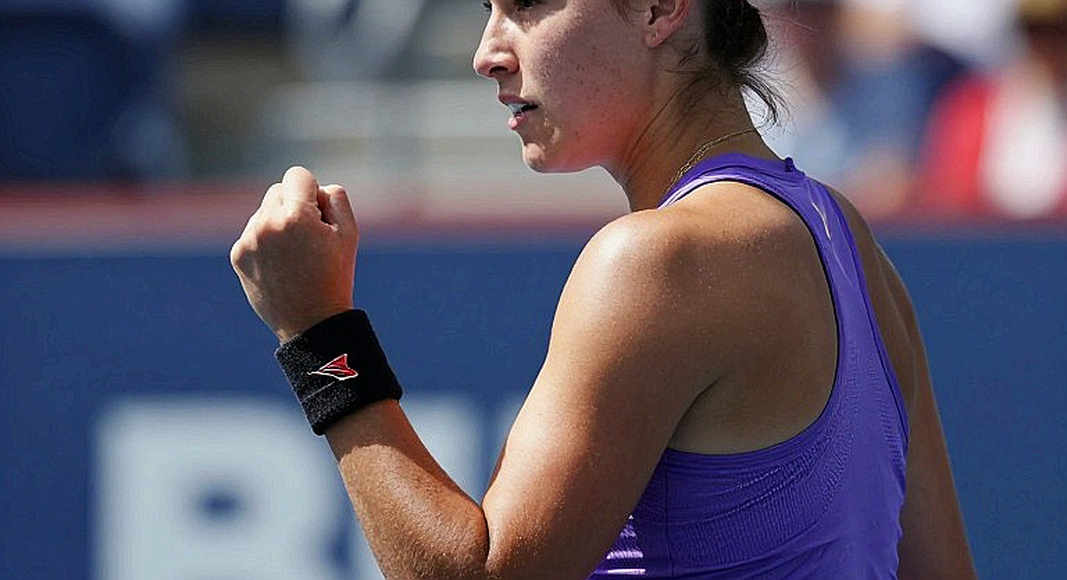
The backhand half-volley in the third game of the second set made the entire Arthur Ashe hold its breath. Carlos Alcaraz had just returned after 4.5 months away from the court due to a wrist injury, and immediately he created a moment that fans had to replay multiple times. But the most notable number wasn't in that shot. It was in the average serve speed: 114 mph - significantly lower than the usual mark for the Spanish player. In a match he won 3-0 against Roman Safiullin, this number said more than any beautiful shot.
Alcaraz entered the 2026 US Open as the No. 2 seed, after Jannik Sinner withdrew with a knee injury. He is seeking his third US Open title in his career - an achievement reserved for legends like Connors, McEnroe, Sampras, Federer, Nadal, and Djokovic. But the path to glory began with overcoming the first round against Roman Safiullin - a player who had beaten Andrey Rublev and Joao Fonseca at Wimbledon, and taken a set off Djokovic. Safiullin once reached a career-high ranking of 36, and at his current position of 99, he remains a dangerous floater in the first round.
Alcaraz's return did not happen in a normal context. He had not played officially for 4.5 months - a long time for any elite athlete. To warm up, he played mixed doubles with legend Serena Williams - a smart decision both tactically and commercially. That match provided him with competitive rhythm, crowd exposure, and an opportunity to test his wrist without the pressure of ranking points.
Sinner's withdrawal is the most important structural event of this tournament. It opens up the top half of the draw and removes the world No. 1 from the role of "blocker." Alcaraz was already the oddsmaker favorite before the tournament, and Sinner's absence further consolidates that position. But this is also a trap: if Alcaraz loses, there is no "he lost to the best player in the world" excuse. The narrative stakes are higher precisely because the field is weaker.
The 3-0 win over Safiullin was not just an ordinary first-round victory. It was a signal of how Alcaraz and his team are managing the return-from-injury process. When data contradicts the eye, trust the data - but don't forget to check its source. And the data here tells a very clear story: 28 winners (20 from the forehand), 27 unforced errors, only 2 aces, and 59% of second-serve points won. The winner/error ratio was 1.04 - not elite, but enough to win a first-round match.
The most important thing: Alcaraz's forehand is still operating perfectly. Twenty of 28 winners came from the forehand - the weapon most dependent on the wrist. If the wrist injury were still affecting him, this number would be hard to achieve. He was "whipping forehands into the corners" as described by journalists at the court. This is the most positive signal for fans. The forehand is Alcaraz's primary attacking weapon, and it is operating at a high level.
But the serve is a different story. The average speed of 114 mph is significantly lower than Alcaraz's usual mark. He had only 2 aces in the entire match - a very low number for a top-3 player. Alcaraz admitted that the reduced serve speed was "partly tactical" and that he hopes to improve as the tournament progresses. This is a mature and self-aware approach for a first match back from injury.
Alcaraz's movement on the court was unaffected by the layoff. He moved "around the court with great agility" and produced a deft half-volley that drew gasps from the crowd. For a player whose game is built on court speed and transition play, this is the most important non-data signal. Movement is typically the last thing to return after a layoff, and the first thing to suffer if the body is compromised.
Alcaraz's mental game also carried him through the pressure. He admitted he "started the day very nervous" and was "most proud of his mental performance - dealing with nerves and doubts." Behavioral evidence: after losing his serve at 0-2 in the second set, he immediately broke back. No panic. No rushing. Just a well-timed decision. This is a sign of emotional regulation under competitive stress.
The long-sleeve compression garment Alcaraz wore under his match kit may serve a dual purpose: protection and proprioceptive feedback. Beyond physical support, the sleeve may give Alcaraz psychological reassurance about the wrist - a common post-injury coping mechanism. I cannot confirm this from the article, but it is a recognized pattern in elite sport. Athletes often use supportive equipment as a way to feel safer about the injured area.
The second-round match against Jaime Faria - a lower-ranked Portuguese player - is an opportunity for Alcaraz to gradually increase his serve speed. He has stated this plan clearly: "I need more matches." This is a candid acknowledgment that match fitness is not yet at Slam-winning level. But this very candor is a sign of maturity. Alcaraz is no longer the impulsive 19-year-old; he is a 23-year-old champion who understands his limits.
In US Open history, only six men have won three or more titles in the Open Era: Connors (5), McEnroe (4), Sampras (5), Federer (5), Nadal (4), and Djokovic (4). Alcaraz, with two prior US Open titles, stands at the threshold of joining this club at age 23. If he does it, he will become the youngest player in history to reach this milestone. This is not just a title; it is a statement of historical standing.
VAR is not wrong. The VAR operator is wrong. And that is where I start my work. In tennis, there is no VAR, but there is Hawk-Eye and there are umpire decisions. In this match, there were no controversies. But there is a bigger question: is the reduced serve speed a smart tactic or a sign of residual caution?
I lean toward the former. When a player of Alcaraz's caliber deliberately reduces serve speed, they typically prioritize accuracy and consistency. 59% of second-serve points won - above the tour average (48-52%) - shows that this trade-off is working. He is winning with his safest weapons while protecting the injured area. This is elite risk management.
But the real question is: what happens when Alcaraz faces a top-20 player in the fourth round or quarterfinals? A 114 mph serve will not be enough to pressure elite returners. If he does not increase his serve speed, his margin for error will shrink significantly. 27 unforced errors in the first match may be acceptable against Safiullin, but it will be a problem against Zverev or Medvedev.
A misplaced card can change the course of an entire season. I was once the one who wrote that wrong. But here, there are no errors in how Alcaraz managed his first match back from injury. He admitted he "started the day very nervous" and was "most proud of his mental performance - dealing with nerves and doubts." Behavioral evidence: after losing his serve at 0-2 in the second set, he immediately broke back. No panic. No rushing. Just a well-timed decision.
I record every card, every minute of stoppage time. Because a wrong number repeated three times becomes truth in the end-of-season report. And the most important number here is not 28 winners or 2 aces. It is 4.5 months - the time Alcaraz spent without official competition. In elite tennis, 4.5 months is an era. His return is not just a win; it is a statement of resilience.
The biggest question is not "Will Alcaraz win the title?" but "Can his wrist withstand seven consecutive best-of-five matches?" That is a question no one can answer right now. But if the first match is any indication, Alcaraz has everything under control.
Cầu thủ liên quan
Bài đề xuất
Tsitsipas 'not surprised' by Kyrgios cocaine ban: The price of a decade of chaos2026-09-03
Light Returns for Sabalenka: No. 1 WTA Blasts Qualifier at 2026 US Open2026-09-04
Djokovic's shocking US Open exit: Not because of Navone, but something else2026-09-03
Djokovic's First-Round US Open Exit: When the Body Betrays and the Referee's Eye Sees the Truth2026-09-03
Data Is Never in a Hurry: Why AFF Cup 2026 Is the Cleanest Laboratory of Vietnamese Football2026-09-03
Pegula vs Kenin: The Verdict from the Spreadsheet — Why 1,300 Points Are Weighing on America's No. 1 Seed at the 2026 US Open?2026-09-03
Bài đề xuất
US Open – The Loudest, Smelliest Grand Slam: When Plane Noise and Burger Smell Shape Tactics2026-09-04
US Open 2026: When Serve Data Rewrites the Second-Round Script2026-09-03
Alcaraz Returns: The Long Sleeve and the Serving Puzzle at the US Open2026-09-03
US Open 2026: When Arthur Ashe Stands Overshadow the Center Court — The Forgotten Data of a Grand Slam2026-09-03
Light Returns for Sabalenka: No. 1 WTA Blasts Qualifier at 2026 US Open2026-09-04
Djokovic's shocking US Open exit: Not because of Navone, but something else2026-09-03
Bài đề xuất
US Open 2026: When Serve Data Rewrites the Second-Round Script2026-09-03
Swiatek vs Podoroska: What the Numbers Say Before the US Open 2026 Second Round2026-09-03
Lilli Tagger - 18-year-old prospect makes mark at US Open with first Grand Slam main-draw win2026-09-03
Light Returns for Sabalenka: No. 1 WTA Blasts Qualifier at 2026 US Open2026-09-04
Tsitsipas 'not surprised' by Kyrgios cocaine ban: The price of a decade of chaos2026-09-03
Bài đề xuất
US Open 2026: When Serve Data Rewrites the Second-Round Script2026-09-03
Tsitsipas 'not surprised' by Kyrgios cocaine ban: The price of a decade of chaos2026-09-03
Lilli Tagger - 18-year-old prospect makes mark at US Open with first Grand Slam main-draw win2026-09-03
Djokovic's First-Round US Open Exit: When the Body Betrays and the Referee's Eye Sees the Truth2026-09-03
Data Is Never in a Hurry: Why AFF Cup 2026 Is the Cleanest Laboratory of Vietnamese Football2026-09-03
Vietnamese Football 2026: The Physical Management Gap During the Pandemic2026-09-03