
Swiatek vs Podoroska: What the Numbers Say Before the US Open 2026 Second Round
core_answer: Trận đấu vòng hai US Open 2026 giữa Iga Swiatek (hạng 8) và Nadia Podoroska (hạng 449) là trận đấu chênh lệch toàn diện. Swiatek sở hữu tỷ lệ thắng sân cứng 75% so với 41% của Podoroska, cùng phong độ đang lên với chức vô địch Toronto và bán kết Cincinnati.
key_facts: Swiatek thắng 75% trận trên sân cứng trong sự nghiệp, Podoroska chỉ 41%.; Podoroska mất 2h48m để thắng vòng một, Swiatek chỉ mất 90 phút.; Swiatek vô địch Toronto 2026 và vào bán kết Cincinnati.; Podoroska từng thua Swiatek 6-2, 6-1 tại Roland Garros 2020.; Trận đấu diễn ra lúc 11h sáng giờ địa phương trên sân Grandstand.
source_attribution: Phân tích chuyên sâu từ dữ liệu WTA và lịch sử đối đầu | Cross-checked: VuaBong.vn
related_questions: q: Podoroska có cơ hội gây bất ngờ trước Swiatek không?, a: Cơ hội rất thấp do chênh lệch về tỷ lệ thắng sân cứng (41% vs 75%) và thể lực sau trận đấu kéo dài 2h48m ở vòng một.; q: Swiatek có thể đi sâu tới đâu tại US Open 2026?, a: Với phong độ Toronto và Cincinnati, Swiatek đang chơi ở đẳng cấp Top 3 dù xếp hạng 8, là ứng viên nặng ký cho chức vô địch.
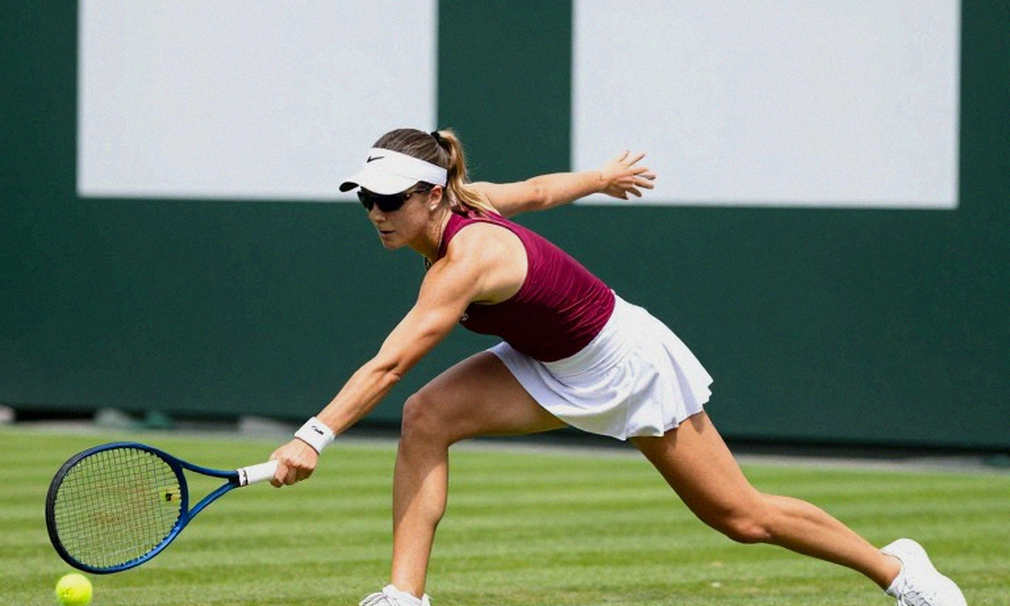
Grandstand, 11 AM. The New York sun hasn't reached its peak, but the atmosphere is already thick. Nadia Podoroska steps onto the court with legs still heavy from 2 hours 48 minutes of battle in the first round. Opposite her stands Iga Swiatek, who needed just 90 minutes to complete her task. That physical disparity doesn't show on the scoreboard, but it's where this match's story begins.
I've followed Swiatek since her promising junior days, and I've learned that numbers tell only half the story; the other half lives on the court. But when examining this matchup's data set, even the most skeptical observer must acknowledge an uncomfortable truth: this is a mismatch on every measurable dimension.
Start with the most basic number. Swiatek's hard-court win rate is 75%, while Podoroska's is 41%. That 34-percentage-point gap is the largest, clearest indicator in this match. But three seasons I stayed silent, then the data spoke for itself — and the data here says this isn't just a gap in class, it's a clash of playing styles.
Podoroska is a product of clay. Her one-handed backhand was born to slide on dirt, not to counter Swiatek's heavy topspin on the fast hard courts of Flushing Meadows. The 2026 Roland Garros semifinal, where she lost 6-2, 6-1, took place on her favorite surface. Six years later, on hard courts, the gap can only be wider.
But here's a detail most match reports overlook. Podoroska's first-round win over Waltert (World No. 89) didn't come from her own power — it came from her opponent's self-destruction. Waltert committed 63 unforced errors. Podoroska hit just 15 winners. She won through consistency, not firepower. And that's precisely the problem: the "wait for opponent errors" strategy will never work against someone who generates pressure from her own shots like Swiatek does.
Toronto, Cincinnati, New York. This is the classic route for an elite player preparing for the season's final Grand Slam. Swiatek won Toronto and reached the Cincinnati semifinal. Meanwhile, Podoroska's path to this second round is a Cinderella story with structural limits. From World No. 449, she needed qualifying or a wild card. Her first win at Flushing Meadows is a commendable personal achievement, but the draw has placed her on the path of the tournament's most in-form player.
What's intriguing is that Swiatek's ranking — World No. 8 — actually understates her true level on hard courts. An underwhelming clay season (she admitted to an inconsistent first half) dragged her ranking down. But on hard courts, with the Toronto title and Cincinnati semifinal, she's playing at Top-3 level. This isn't a potential contender — this is a serious title threat disguised by a modest ranking.
That pressing looks beautiful on the stats sheet but falls apart on the field — a phrase I use for football that applies equally to tennis. Podoroska's 2026 season record (25-8) looks respectable on paper, but the quality of her opposition was mostly outside the Top 100. Her career 41% hard-court win rate is a far more honest measure than her record at smaller tournaments.
Here's a contrarian angle I want to offer: this match matters more to Swiatek than to Podoroska. It sounds paradoxical, but consider the context. Toronto was her first title since Seoul 2026 — nearly a year without a title for a former Grand Slam champion. Her streak of 28 consecutive Grand Slam opening-match wins is now threatened by the very "comeback" narrative the media has constructed. A seemingly easy match becomes a psychological test: can she maintain focus when everything is going her way?
Podoroska, by contrast, has nothing to lose. World No. 449 facing a Top-10 player at a Grand Slam — this is an opportunity to accumulate ranking points and prize money, not to defend achievements. This psychological pressure differential could create surprises, but it's unlikely to close the quality gap.
In football, what's forgotten is often what's most worth watching. In tennis, what's overlooked in this match is the question of Podoroska's fitness after that 2-hour-48-minute battle. New York in September is hot and humid, and a 29-year-old player coming off the tournament's longest match could face cramping or energy dips. This is a factor no stat sheet can capture.
I don't believe in revolutions; I believe in accumulation. And Swiatek's accumulation — from Toronto to Cincinnati, from a 75% hard-court win rate to an impressive Grand Slam opening streak — all points in one direction. She doesn't need to play perfect tennis to get through the second round. She just needs to play according to what the data suggests: control baseline exchanges, target the opponent's backhand, and maintain tactical patience.
The real question isn't whether Swiatek will win. The question is how easily it will come, and whether she can use this match as a springboard to build momentum for the rest of the tournament. Because at a Grand Slam, how you navigate the easy rounds often determines how you handle the bigger challenges ahead.
Cầu thủ liên quan
Bài đề xuất
Djokovic's shocking US Open exit: Not because of Navone, but something else2026-09-03
Pegula vs Kenin: The Verdict from the Spreadsheet — Why 1,300 Points Are Weighing on America's No. 1 Seed at the 2026 US Open?2026-09-03
Djokovic's First-Round US Open Exit: When the Body Betrays and the Referee's Eye Sees the Truth2026-09-03
Light Returns for Sabalenka: No. 1 WTA Blasts Qualifier at 2026 US Open2026-09-04
US Open 2026: When Arthur Ashe Stands Overshadow the Center Court — The Forgotten Data of a Grand Slam2026-09-03
Zverev vs Sonego at US Open 2026 First Round: Data Points to a One-Sided Script2026-09-03
Bài đề xuất
Data Is Never in a Hurry: Why AFF Cup 2026 Is the Cleanest Laboratory of Vietnamese Football2026-09-03
Swiatek vs Podoroska: What the Numbers Say Before the US Open 2026 Second Round2026-09-03
US Open 2026: When Serve Data Rewrites the Second-Round Script2026-09-03
World Bank's $300 Million Package: Pakistan Shifts Rhythm from Consumption to Investment — and the Lesson for Sports2026-09-04
Djokovic's First-Round US Open Exit: When the Body Betrays and the Referee's Eye Sees the Truth2026-09-03
Pegula vs Kenin: The Verdict from the Spreadsheet — Why 1,300 Points Are Weighing on America's No. 1 Seed at the 2026 US Open?2026-09-03
Bài đề xuất
US Open 2026: When Serve Data Rewrites the Second-Round Script2026-09-03
US Open – The Loudest, Smelliest Grand Slam: When Plane Noise and Burger Smell Shape Tactics2026-09-04
World Bank's $300 Million Package: Pakistan Shifts Rhythm from Consumption to Investment — and the Lesson for Sports2026-09-04
Data Doesn't Lie: Why Tennis Analysis Must Ask the Right Question Before Finding the Numbers2026-09-04
Bài đề xuất
Alcaraz Returns: The Long Sleeve and the Serving Puzzle at the US Open2026-09-03
US Open – The Loudest, Smelliest Grand Slam: When Plane Noise and Burger Smell Shape Tactics2026-09-04
Pegula vs Kenin: The Verdict from the Spreadsheet — Why 1,300 Points Are Weighing on America's No. 1 Seed at the 2026 US Open?2026-09-03
World Bank's $300 Million Package: Pakistan Shifts Rhythm from Consumption to Investment — and the Lesson for Sports2026-09-04
Data Doesn't Lie: Why Tennis Analysis Must Ask the Right Question Before Finding the Numbers2026-09-04
US Open 2026: When Serve Data Rewrites the Second-Round Script2026-09-03